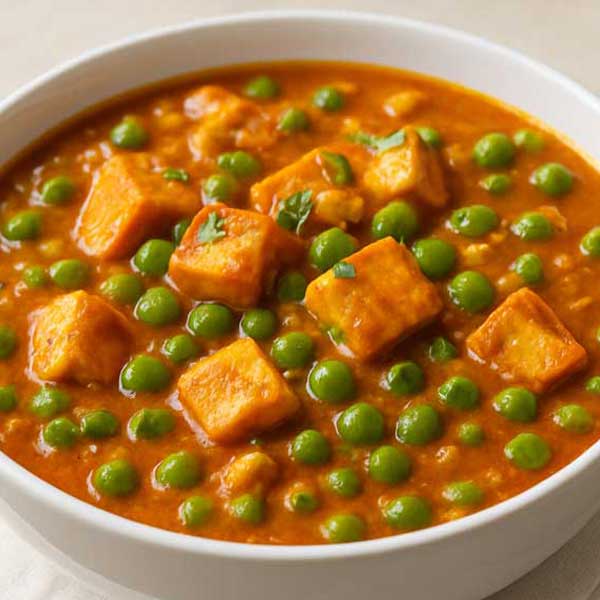
Paneer Pasanda Recipe (Royal Mughlai Stuffed Paneer in Creamy Gravy)
There are a handful of Indian recipes that genuinely feel like an occasion when you put them on the table, and Paneer Pasanda is unquestionably one of them. This is Mughal royal kitchen cooking at its most indulgent and most beautiful: thick slabs of paneer stuffed with a fragrant mixture of dry fruits, nuts, and khoya, coated in a delicate batter, lightly pan-fried, and then simmered in one of the most luxurious gravies in all of Indian cooking. Rich with cream, cashew paste, and warm aromatics, the gravy is smooth, subtly sweet, and deeply fragrant. Paneer Pasanda is the kind of dish that makes people put down their phones and pay attention to what they are eating.
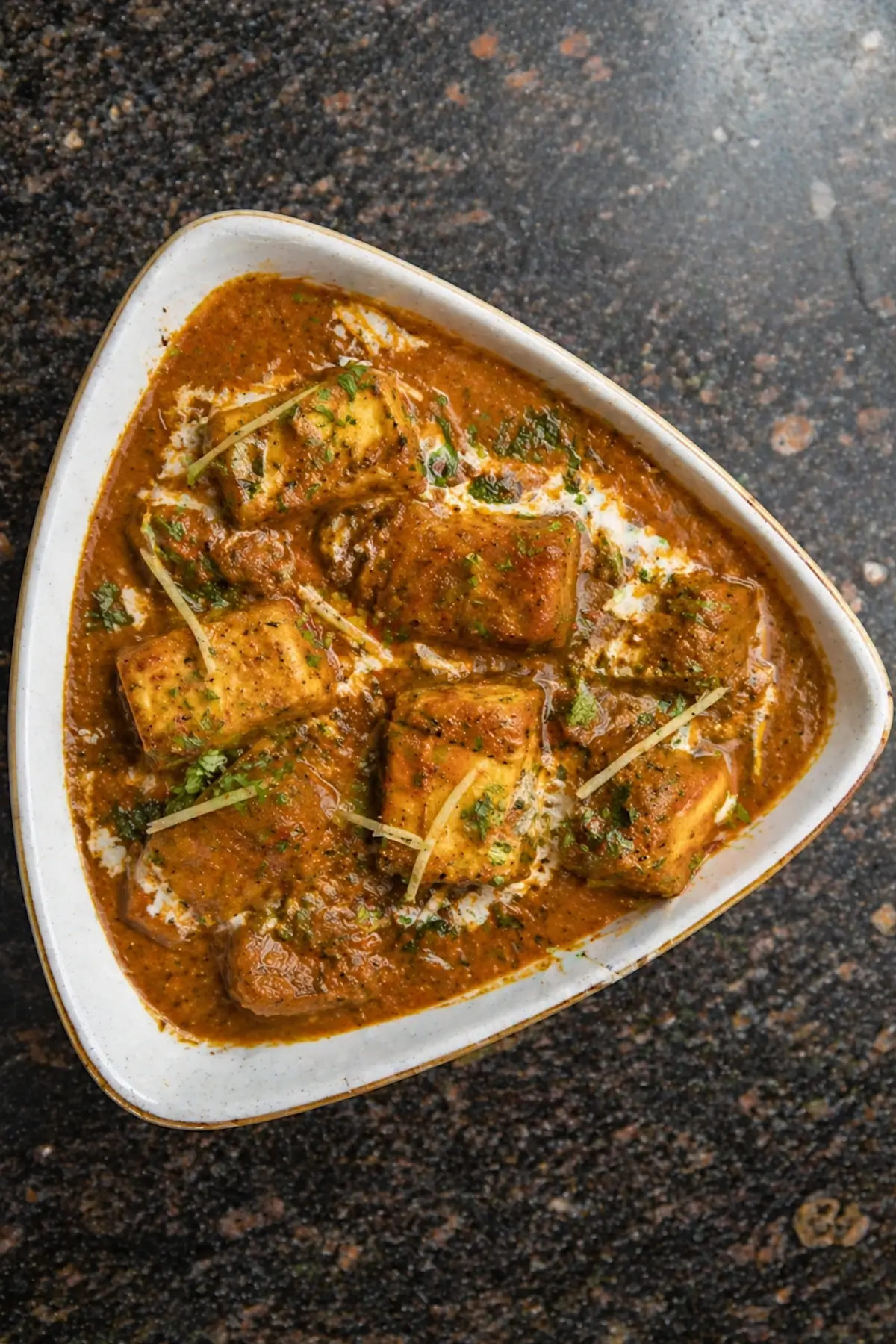
The word pasanda comes from the Persian word pasandida, meaning favorite or beloved, and the dish was originally made with thin slices of marinated lamb that were flattened, stuffed, and cooked in a royal court style. Over time, paneer became the most popular version of pasanda in North Indian vegetarian cooking, and it translates beautifully. The stuffed paneer absorbs the rich gravy, the dry fruit filling adds sweet, nutty pockets of flavor inside each piece, and the overall presentation, pale golden paneer pieces floating in a cream-colored, saffron-tinged gravy, is genuinely spectacular.
For Indian food enthusiasts, Paneer Pasanda represents an opportunity to bring Mughlai restaurant cooking into the home kitchen. It is a more involved recipe than everyday paneer dishes and is best reserved for weekends, dinner parties, or special occasions. But the steps are entirely manageable, and the result is so dramatically different from anything else in the Indian home cook’s repertoire that the effort is completely worthwhile. Serve with garlic naan, paratha, or jeera rice for a complete royal feast.
Why You Will Love This Paneer Pasanda Recipe
- Genuinely spectacular presentation: Few Indian dishes look as impressive on the table as Paneer Pasanda. The stuffed paneer in pale, cream-colored gravy with saffron is visually extraordinary.
- A completely unique eating experience: The stuffed paneer with dry fruit filling creates moments of surprise in every bite, something no other paneer curry does.
- Rich Mughlai flavor heritage: This is one of the most authentic connections to the royal Indian cooking tradition available to home cooks.
- Perfect for special occasions and dinner parties: Paneer Pasanda is the kind of dish that makes a meal feel truly celebratory.
- Completely vegetarian and deeply satisfying
- Make-ahead friendly: The gravy can be made a day ahead. The stuffed paneer can be pan-fried ahead and refrigerated. Final assembly takes just minutes.
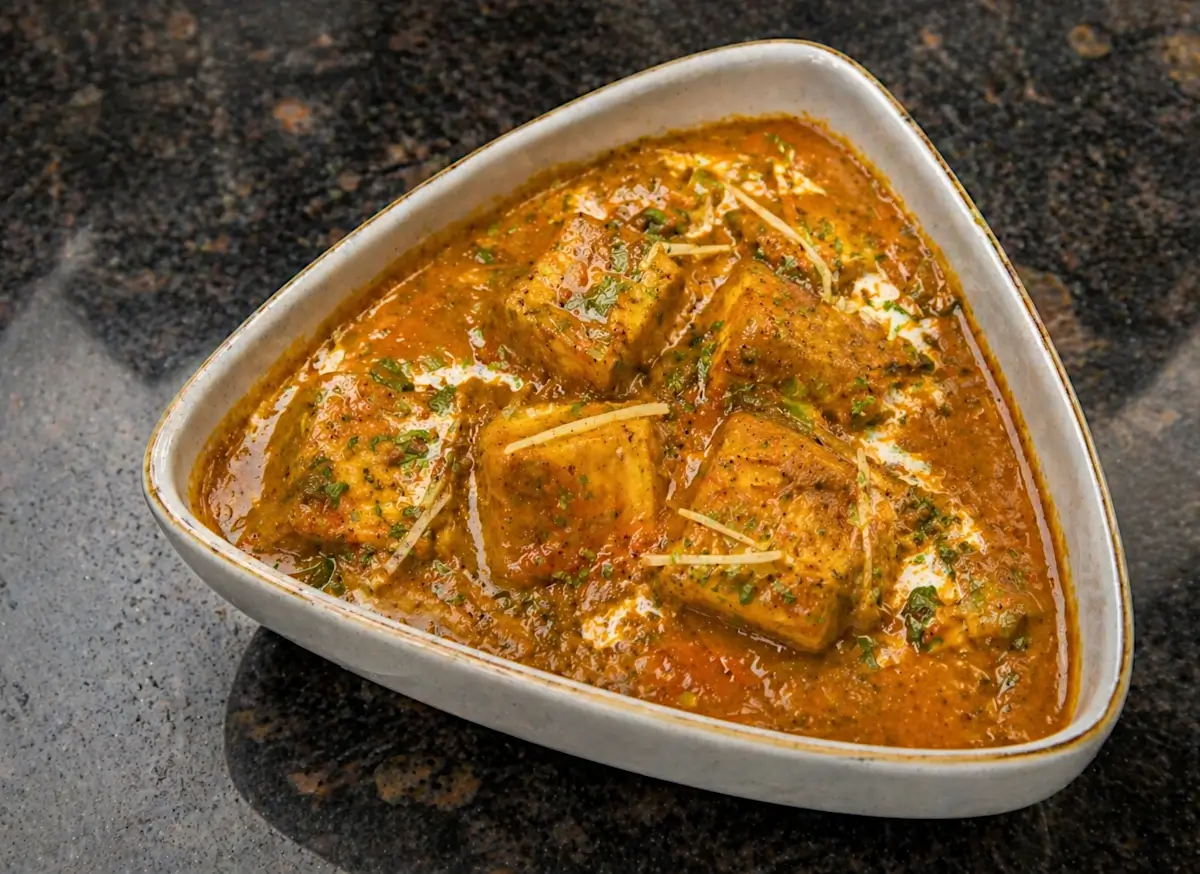
Ingredients for Paneer Pasanda (with Metric Measurements)
All measurements are given in US cups and spoons with metric equivalents in brackets for international readers.
For the Stuffed Paneer
- 14 oz (400g) paneer: One large block. The paneer must be cut into thick rectangular slabs approximately half an inch thick, then each slab sliced horizontally to create a pocket for stuffing. See method below.
- 2 tablespoons cashews, finely chopped: Or cashew paste
- 2 tablespoons raisins or golden sultanas: Chopped roughly
- 1 tablespoon pistachios, finely chopped
- 1 tablespoon khoya (mawa): Optional but authentic. Khoya is dried evaporated milk solids, available at Indian grocery stores. Substitute with 1 tablespoon of cream cheese or thick ricotta if unavailable.
- 1 tablespoon fresh cilantro, very finely chopped
- Half teaspoon green cardamom powder
- Pinch of saffron, dissolved in 1 teaspoon warm milk
- Salt and white pepper to taste
For the Paneer Coating
- Half cup (60g) all-purpose flour (maida)
- 2 tablespoons cornstarch
- Half teaspoon white pepper powder
- Salt to taste
- Water as needed: To make a thick, smooth batter that coats the back of a spoon
For the Pasanda Gravy
- 3 tablespoons ghee or butter: Ghee is traditional and strongly preferred for the Mughlai character.
- 2 medium onions, roughly chopped: About 2 cups (300g). These will be blended into the gravy.
- Half cup (70g) raw cashews: Soaked in warm water for 20 minutes and drained. These form the base of the rich, creamy gravy.
- 2 tablespoons melon seeds (magaz): Optional but traditional. Available at grocery stores. Substitute with additional cashews.
- 1 tablespoon poppy seeds (khus khus): Optional, adds creaminess and body. Available at grocery stores and some health food stores.
- 4 green cardamom pods
- 1-inch cinnamon stick
- 4 cloves
- 1 bay leaf
- 1 tablespoon ginger-garlic paste
- Half cup (120g) plain yogurt: Whisked smooth
- Half cup (120ml) fresh cream
- Half cup (120ml) water or milk
- 1 teaspoon white pepper powder: White pepper rather than black keeps the gravy pale and elegant.
- Half teaspoon green cardamom powder
- Pinch of saffron: Dissolved in 2 tablespoons warm milk. This is the defining color and aroma of authentic pasanda gravy.
- 1 teaspoon rose water: Optional but very authentic. Adds the floral, perfumed note characteristic of Mughlai cooking. Available at Indian grocery stores and Middle Eastern markets.
- Salt to taste
For Garnish
- Sliced pistachios and almonds
- Saffron strands soaked in warm milk
- Fresh cilantro or fresh mint leaves
- A swirl of cream
- Dried rose petals: Optional, for a beautiful and authentic Mughlai presentation
How to Make Paneer Pasanda Step by Step
Step 1: Prepare the Stuffing
In a small bowl, combine the finely chopped cashews, chopped raisins, pistachios, khoya or cream cheese, fresh cilantro, cardamom powder, a few drops of the saffron milk, and a pinch of salt and white pepper. Mix well until the stuffing holds together loosely. Taste and adjust. The stuffing should be slightly sweet from the raisins, nutty from the cashews and pistachios, and very fragrant from the cardamom and saffron. Set aside.
Step 2: Stuff the Paneer
Cut the paneer block into rectangular slabs approximately 2 inches by 1.5 inches and half an inch thick. Using a sharp knife held parallel to the cutting board, carefully slice horizontally through each slab almost to the opposite edge, leaving a hinge on one side to create a pocket. Do not cut all the way through. Open the pocket gently and place a teaspoon of stuffing inside. Press the paneer closed gently around the stuffing. The stuffed paneer pieces should hold together without the filling falling out. If needed, press a small toothpick through the edge to secure during frying and remove before serving.
Step 3: Make the Batter and Pan-Fry the Paneer
In a bowl, whisk together the flour, cornstarch, white pepper, salt, and enough water to make a smooth, thick batter that coats the back of a spoon. Heat 2 tablespoons of oil in a flat pan over medium heat. Dip each stuffed paneer piece into the batter, coating all sides, and place immediately in the pan. Fry for 2 to 3 minutes per side until lightly golden and the batter is set and slightly crisp. Remove carefully and set aside on a plate. The batter coating protects the stuffing during gravy simmering and adds a pleasant, slight texture to the exterior of the paneer.
Step 4: Make the Cashew-Onion Paste
In a small saucepan, combine the roughly chopped onions, soaked cashews, melon seeds if using, and poppy seeds if using with just enough water to cover. Bring to a boil and simmer for 10 minutes until the onions are very soft. Remove from heat and allow to cool. Blend to a very smooth, fine paste in a high-speed blender. If the paste is not completely smooth, pass it through a fine sieve to remove any fibrous texture. This smooth paste is the foundation of the luxurious pasanda gravy.
Step 5: Build the Pasanda Gravy
Heat ghee in a wide, heavy-bottomed pan over medium heat. Add the whole spices: cardamom pods, cinnamon, cloves, and bay leaf. Let them sizzle for 1 minute until fragrant. Add the ginger-garlic paste and cook for 2 minutes until the raw smell disappears. Add the smooth cashew-onion paste and cook over medium heat for 5 to 6 minutes, stirring constantly, until the paste deepens slightly in color and the ghee begins to separate around the edges. Add the white pepper and cardamom powder and stir well. Add the whisked yogurt one tablespoon at a time, stirring vigorously after each addition. Cook for 3 minutes. Add the water or milk and bring to a gentle simmer. Stir in the cream and simmer for 2 minutes. The gravy should be smooth, pale, and have a luxurious consistency. Add the saffron milk and rose water if using. Taste and adjust salt. The gravy should smell intoxicatingly fragrant from the saffron, cardamom, and rose water.
Step 6: Add the Stuffed Paneer to the Gravy
Gently lower the batter-fried stuffed paneer pieces into the simmering gravy. Spoon the gravy over each piece carefully. Cover and simmer over very low heat for 5 minutes. The paneer will absorb the saffron color and the gravy will permeate through the batter coating slightly.
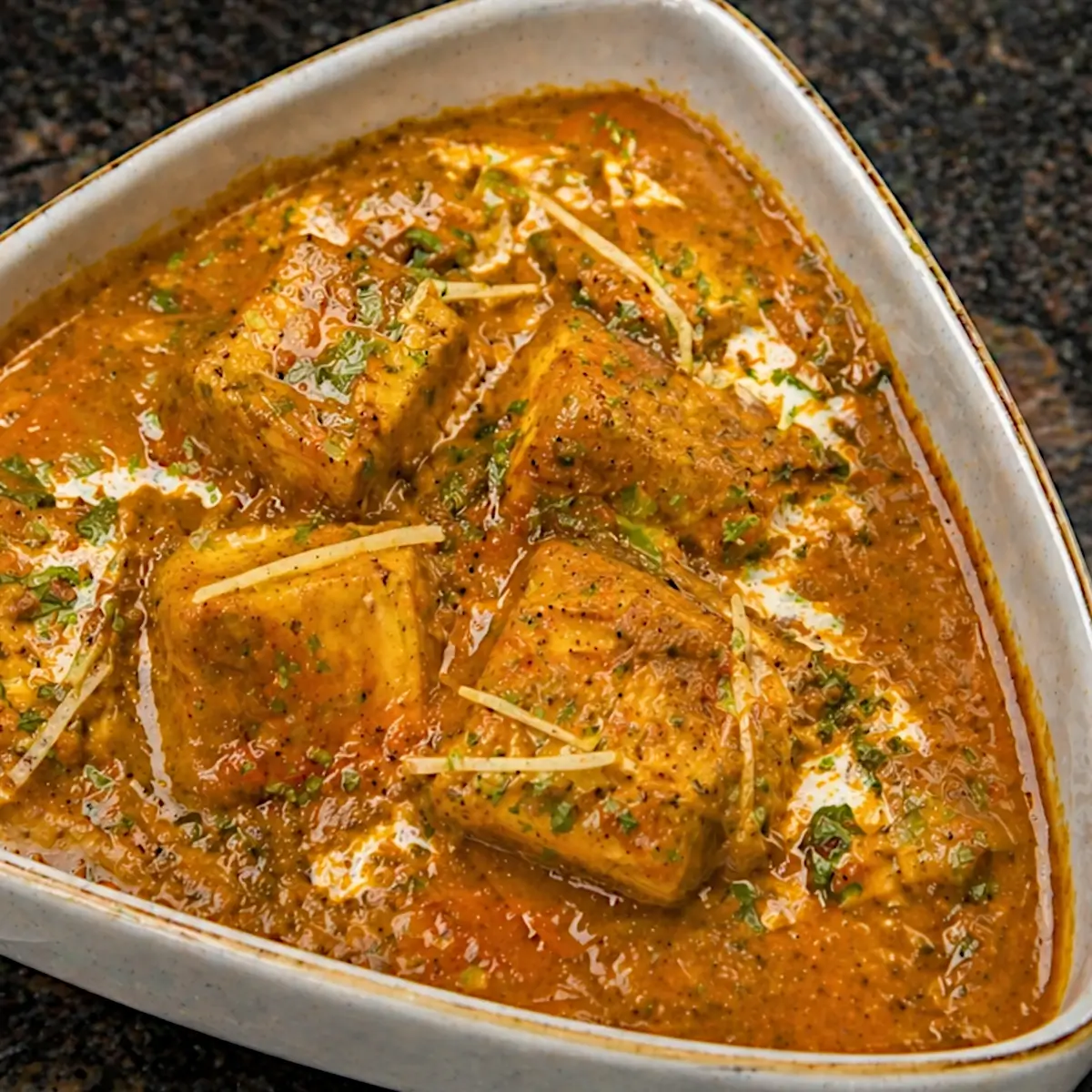
Do not stir aggressively as the stuffed paneer pieces are fragile. Shake the pan gently or use a wide spoon to baste.
Step 7: Garnish and Serve
Transfer to a serving bowl or serve directly in the pan. Drizzle extra saffron milk over the top. Scatter sliced pistachios, almonds, and dried rose petals if using. Add a swirl of cream. Garnish with fresh mint or cilantro. Serve immediately at the table as a showstopper main course.
Pro Tips for the Best Paneer Pasanda
- Use fresh, firm paneer for stuffing: The paneer must be firm enough to slice into pockets without crumbling. If your paneer is very soft, refrigerate it for 30 minutes before slicing. Homemade paneer pressed very firmly gives the best results for stuffing.
- The cashew-onion paste must be completely smooth: The silky, creamy character of the pasanda gravy depends entirely on a perfectly smooth paste. Blend for at least 2 minutes and strain through a fine sieve if your blender leaves any texture.
- Use white pepper, not black: White pepper keeps the gravy pale and elegant. Black pepper specks in a cream-colored Mughlai gravy are visually wrong and slightly out of character.
- Saffron is non-negotiable: The faint golden color and incomparable floral aroma of saffron is what makes Paneer Pasanda look and taste authentically Mughlai. A small pinch dissolved in warm milk is all you need. Good saffron is available at Whole Foods, Trader Joe’s, and Indian and Middle Eastern grocery stores.
- Rose water should be used with a light hand: A half teaspoon of good quality rose water adds a beautiful, authentic Mughlai floral note. Too much rose water makes the dish taste like perfume. Use it carefully.
- Make the components ahead: The gravy keeps refrigerated for 2 days. The stuffed pan-fried paneer pieces keep refrigerated for 1 day. Combine and heat gently just before serving. This is what makes Paneer Pasanda an excellent dinner party dish.
What to Serve with Paneer Pasanda
- Garlic Naan: The ideal pairing. The rich, creamy pasanda gravy is extraordinary scooped with warm naan.
- Paratha: Flaky, layered paratha alongside this Mughlai curry is a deeply indulgent combination.
- Jeera Rice: Clean, aromatic cumin rice is a beautiful base for the pale, saffron-tinged pasanda gravy.
- Boondi Raita: A cooling yogurt side that refreshes between bites of the rich curry.
- Masala Pulao: A gently spiced rice dish that pairs beautifully with the delicate Mughlai gravy.
- Cucumber Salad: Light and refreshing as a contrast to the richness of the pasanda.
Storage and Reheating Instructions
How to Store
Refrigerator: Cool completely and store in an airtight container for up to 2 days. The stuffed paneer softens slightly in the gravy over time, which is actually pleasant. Store the garnishes separately and apply fresh when reheating.
Freezer: The gravy freezes well for up to 1 month. The stuffed paneer is better not frozen as the texture changes significantly. Make fresh stuffed paneer when serving from frozen gravy.
How to Reheat
- Stovetop (recommended): Reheat very gently over low heat, covered, stirring occasionally and adding a splash of cream or milk to loosen the gravy as needed. Do not boil.
Nutrition and Health Benefits
One serving of Paneer Pasanda (recipe serves 4) contains approximately:
- Calories: 520 kcal
- Protein: 20g
- Carbohydrates: 22g
- Fat: 40g
- Calcium: 38% of daily recommended value
- Sodium: 480mg
Paneer Pasanda is the most indulgent recipe on this site and is intended as a special occasion dish rather than an everyday meal. The high calorie content comes primarily from the cream, cashew paste, and ghee that define its Mughlai character. However, the nutritional quality is excellent: paneer provides complete protein and calcium, cashews deliver heart-healthy monounsaturated fats and magnesium, saffron contains powerful antioxidant compounds including crocin and safranal, and cardamom has well-documented digestive and antioxidant benefits. For a special occasion, Paneer Pasanda is a deeply nourishing and extraordinary dish that honors one of the most sophisticated culinary traditions in the world.
Frequently Asked Questions
Yes. You can skip the stuffing entirely and simply pan-fry plain paneer slabs in the batter, then add to the pasanda gravy. You lose the surprise element of the dry fruit filling but the gravy itself is so extraordinary that the dish remains outstanding. This unstuffed version is also significantly faster to prepare.
Khoya, also called mawa, is available at most Indian grocery stores in the refrigerated or frozen section. It is sold in blocks. Substitute with an equal amount of cream cheese, ricotta, or condensed milk in the stuffing if unavailable.
You can substitute the cream with full-fat coconut milk for a dairy-free version, though the flavor profile changes noticeably. For a lighter version, use half the cream quantity and replace the rest with whole milk. The gravy will be thinner but still delicious.
Both are rich Mughlai-style paneer dishes but they are distinct. Shahi Paneer uses plain paneer cubes in a tomato-cream-cashew gravy. Paneer Pasanda uses stuffed, batter-fried paneer slabs in a purer cream and cashew gravy without tomatoes, giving it a paler color and different flavor. Pasanda is generally considered the more elaborate and festive of the two.